For partners
You're driving anyway.
Take someone with you.
This isn't a job and you're not a taxi. Publish the journey you already make, and people going the same way ask to come along. You decide who. You decide when.
The supply
The seats already exist.
They just leave without anyone in them.
A car heading from Kasoa to Korle Bu at ten to six is going whether or not anyone else is in it. The fuel is bought, the traffic is sat through, and three of the four seats are doing nothing.

4
Seats in a typical saloon
1
Usually occupied at 7am
UpRide's job is to find the people whose journey fits inside that one, handle the introduction, the schedule and the money, and otherwise stay out of the way.
01 — Your corridor
Your commute, written down once.
Times, days, seats. It repeats with your week.
Where you start, where you finish, what time you leave, which days you drive, how many seats you can spare. Commuters only see you if their journey fits inside yours, and you see the detour each one costs you before you answer.
Your endpoints stay approximate. No Commuter ever sees your address, and no map on this site or in the app puts a pin on your house.
02 — Asked, not dispatched
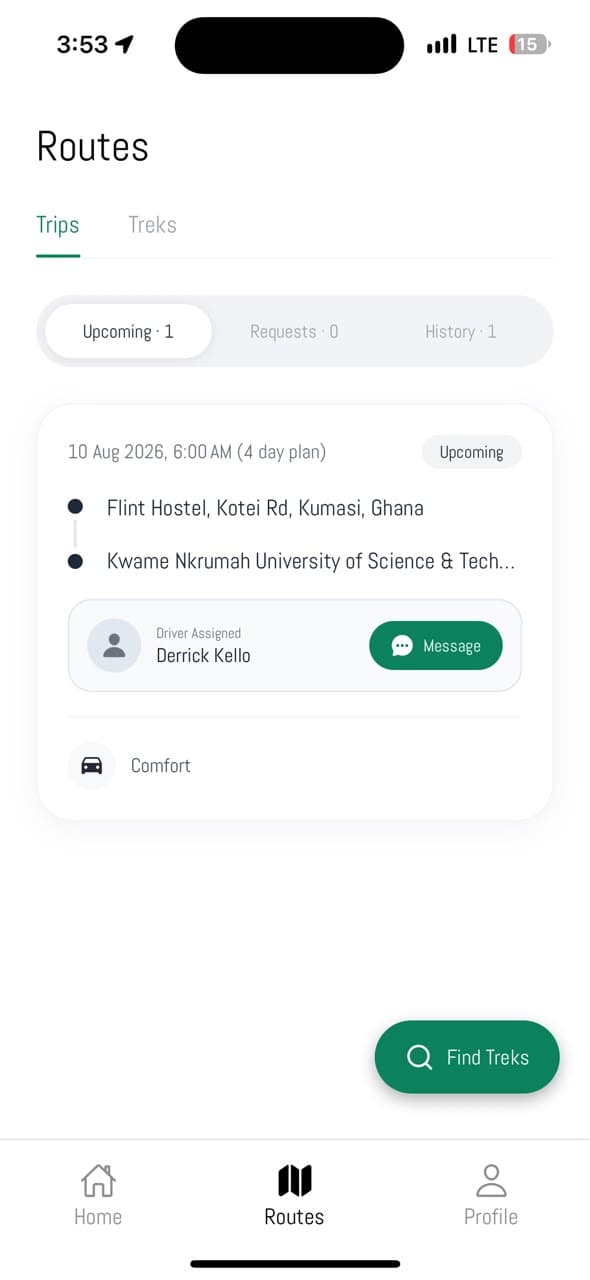
A no costs you nothing.
Turn down a bad detour, a wrong morning, a full week.
You're not a supplier being sent jobs. Every Commuter is a request you can accept or decline, and declining does nothing to you. No penalty, no score, no queue position.
Boarding is confirmed with a code, messages stay in the app, and you rate Commuters the same way they rate you.
What you receive
Seats you weren't using,
on a journey you were making.
You are already driving to work. UpRide puts compatible Commuters in the seats beside you and you receive a share of what they pay for those seats.
01
It comes off a journey you already make
This is not a second job and there is no shift to sign up for. The route is the one you drive anyway; the seats are the ones that were going to travel empty.
02
More compatible seats, more you receive
What you receive rises with the number of compatible seats actually taken on your corridor. It depends on your route, how many seats are filled and how often you take part, so nobody can promise you a figure.
03
Pilot terms, published when set
Partner terms for the pilot are being finalised. The rate, how often it pays out and what documents you'll need are shown during onboarding rather than guessed at here.
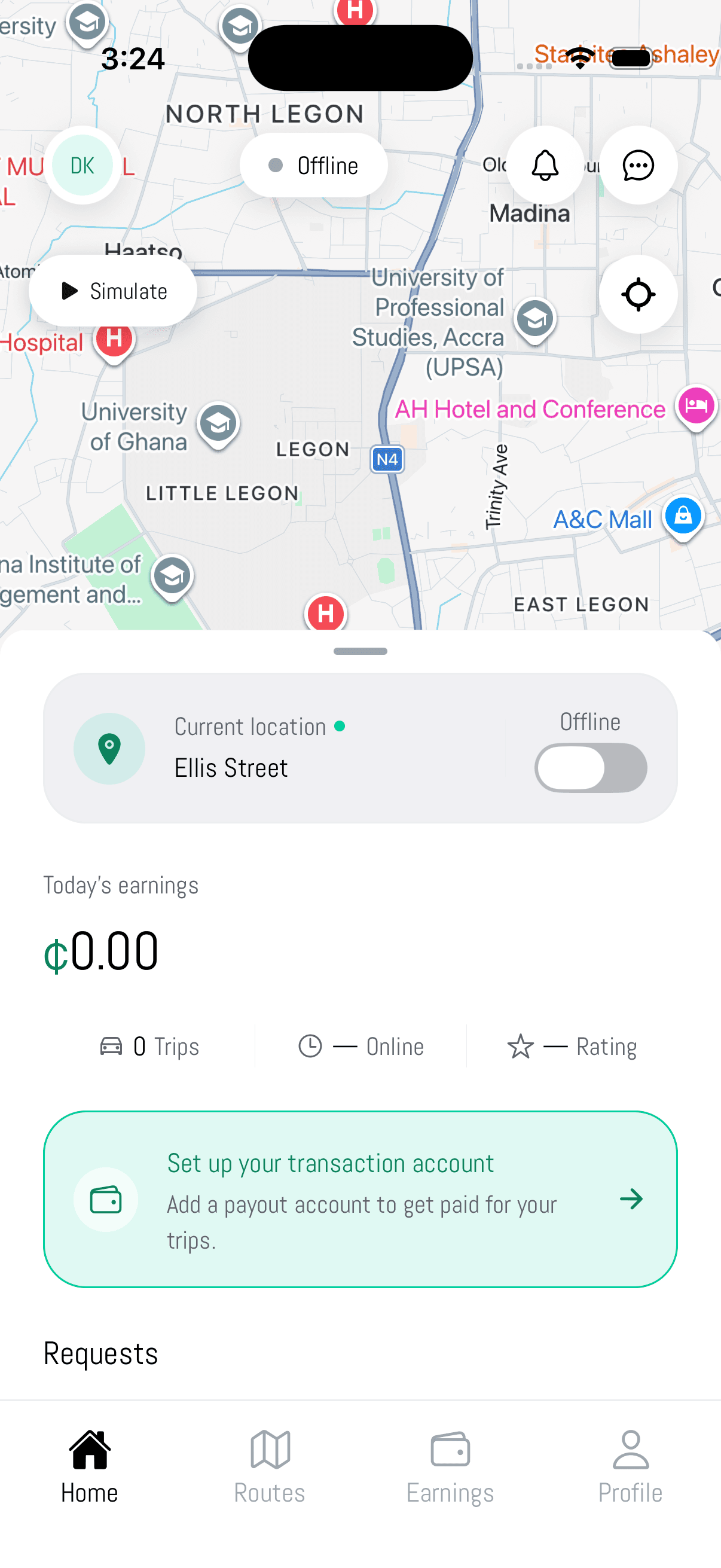
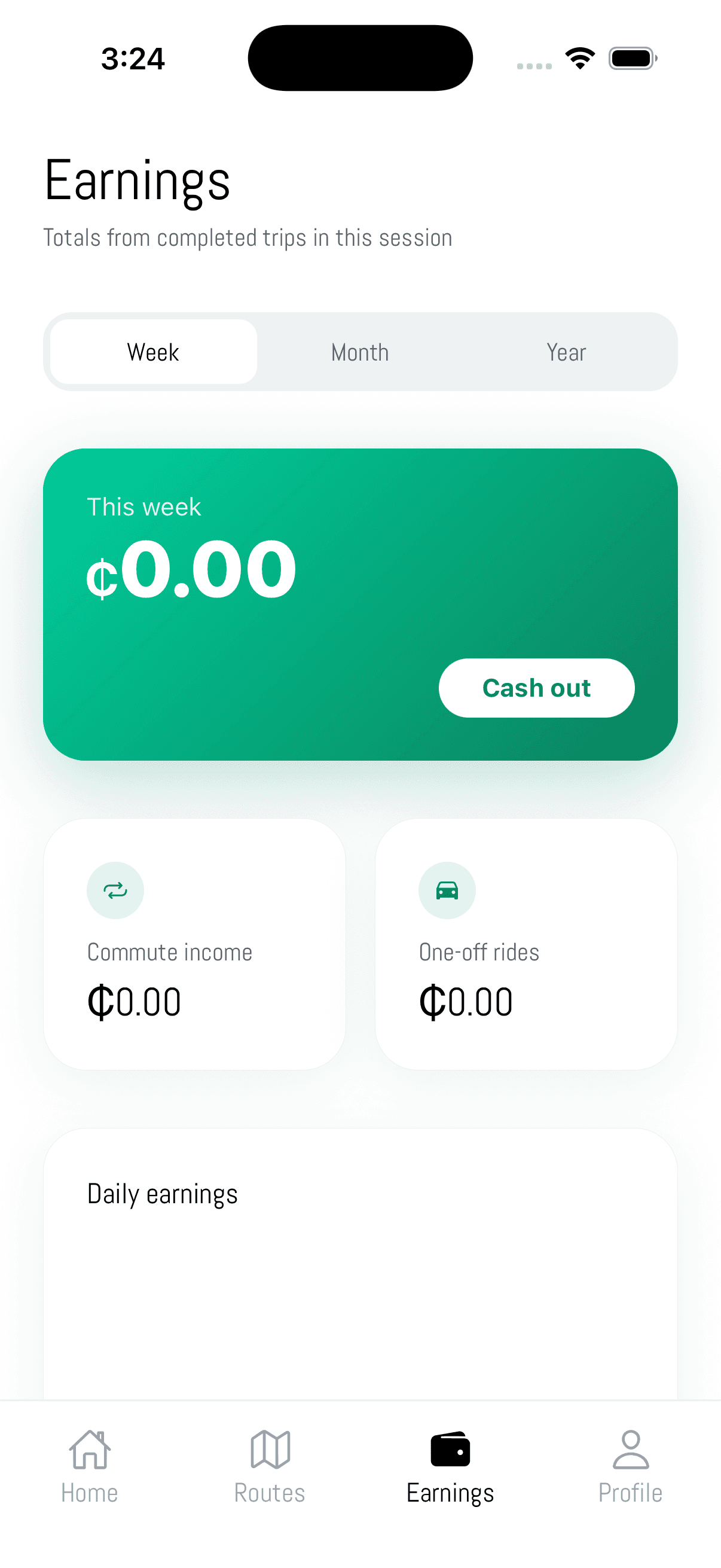
Screenshot from the Partner app. Figures read zero because no trips have run on this account, not because of what a Partner receives.
Before you carry anyone
You get approved first.
Identity documents, a photo of you and a photo of the car, checked before you appear in anyone's search results. More checks are being added through the pilot, and you'll be told what you're asked for during onboarding.
Identity and vehicle
Checked before you can carry anyone. An unapproved Partner never appears in a search result. Your driver's licence and vehicle documents are part of what we ask for.
Your own rating
Commuters rate you and you rate them, after every trip, both directions.
No phone numbers change hands
Pickups get arranged in the app. You aren't giving your number to strangers.
A code at the door
The Commuter shows a digital pass, so the person getting in is the person who booked.